When pressure becomes the landscape
In high-demand environments, pressure stops being an event and becomes the backdrop. The body adapts the only way it knows and spends the day mobilised: shoulders up, breath short, attention scattered across ten tabs.
The plan is usually to make up for it later. At the weekend, on holiday, when the project is over. But that strategy hands your recovery over to something that doesn't depend on you. Autonomy means having a resource that works in the middle of the working day, and not only once it is over.
Autonomy is not enduring more
The word resilience has come to mean endurance: carrying more load, for longer. Apnea teaches something else. In the water, whoever fights the pause burns more oxygen and shortens it; whoever relaxes into it goes further, and stops when they need to stop.
At work, the same logic holds. The autonomy that matters here is noticing the signals earlier, such as tension rising, breath getting short or the urge to answer on impulse, and gaining a few seconds to choose the response. No superpower. Just a gap, small and trainable.
Three moments to practise in the middle of the day
You don't need a mat or silence. Three minutes are enough, with the rhythm from the article on breathing and stress, the exhale longer than the inhale.
- Before what matters. A presentation, a negotiation, a difficult conversation. Three minutes before, not three seconds.
- After what weighed on you. A tense meeting leaves a residue in the body. Breathing before opening the next email keeps that residue out of the next decision.
- On the way home. The commute, or the minutes before you leave, mark the border between work and the rest of life, for the body as well.
One important rule: what goes into your routine is the breathing. Apnea belongs to supervised practice, never at the wheel and never alone in the water.
Why water teaches faster
On land, you can bargain with discomfort: check your phone, change the subject, put it off. In the water, holding your breath, the signal is clear and allows no distraction. You learn, in a very physical way, the difference between a signal that asks for attention and one that asks for action.
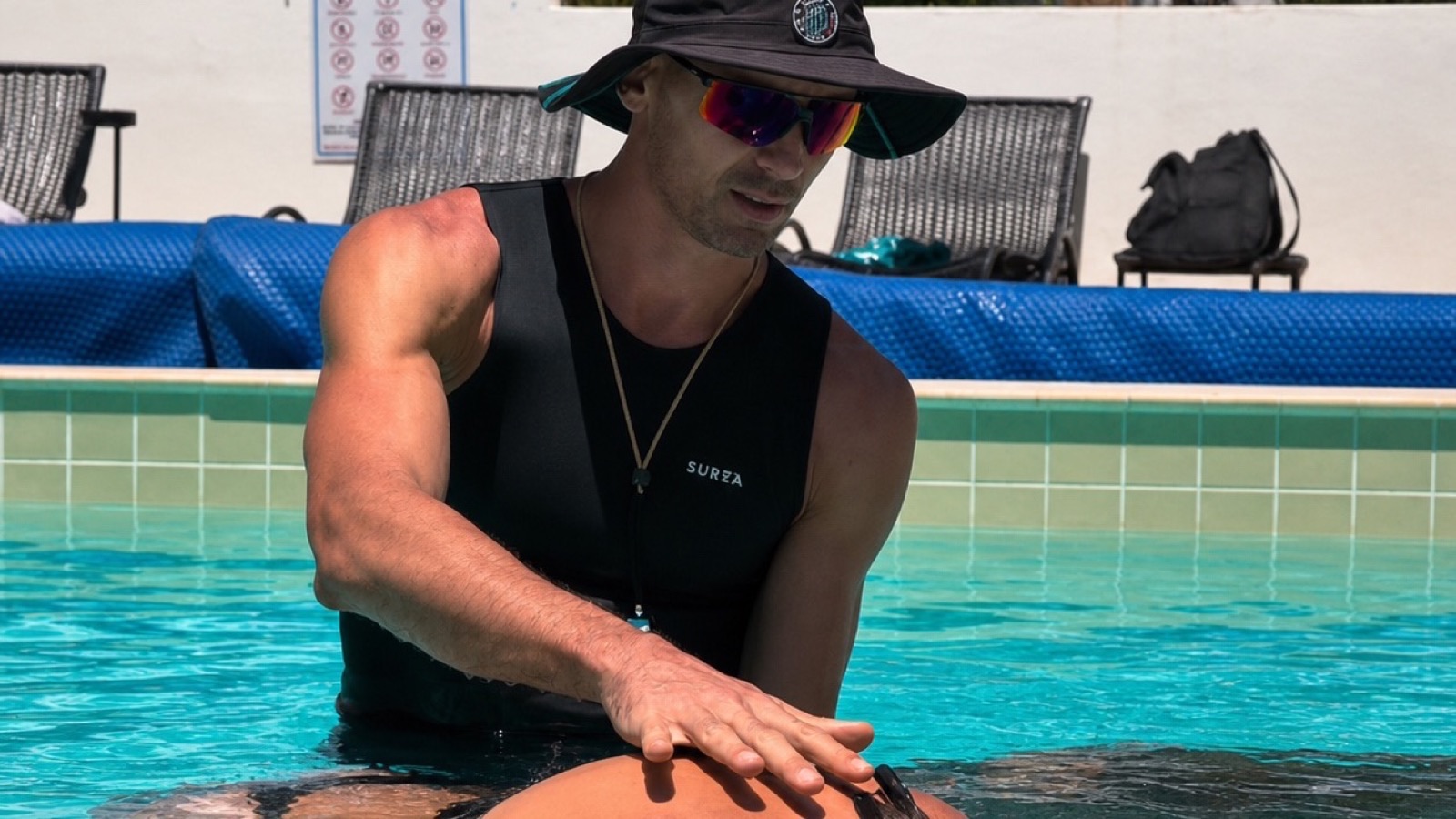
It is a short, intense experience, done under qualified supervision, and what you learn there leaves the pool with you. The article on static apnea explains how it works.
When the problem is bigger than breathing
No breathing practice fixes an impossible workload, a toxic culture or burnout that has already set in. If you recognise yourself in tiredness that doesn't lift, constant irritability or trouble switching off even on days off, see a health professional. The practice can go alongside that care without taking its place.
What breathing offers is more modest, and therefore reliable: a point of support you carry in your body, available on a Wednesday at eleven in the morning.