Two pedals, no switch
The autonomic nervous system looks after everything that runs by itself: heartbeat, blood pressure, digestion, temperature. It has two branches. The sympathetic mobilises: it speeds up, alerts, prepares you to act. The parasympathetic restores: it slows down, digests, repairs.
They don't work like on and off. Think of an accelerator and a brake, adjusted all the time. Stress itself is not the villain; it is what helps you deliver on a tight deadline. The problem is the foot that never leaves the accelerator, the whole day in mobilisation mode, waiting for the holidays to brake.
Diving's oldest reflex
When your face meets the water and your breath stops, the body triggers the diving reflex, a response we share with other mammals. The heart slows down, and the blood vessels in the limbs narrow to save oxygen for what matters most.
The interesting part is that both pedals work together here. The slowing of the heart runs through the vagus nerve, one of the main pathways of the parasympathetic system, while the narrowing of the vessels is the sympathetic's work. In apnea, you feel something that usually happens far from awareness: the body adjusting itself to conserve.
The heart follows the breath
Try it with a finger on your pulse. As you breathe in, the heart tends to speed up a little; as you breathe out, to slow down. It is a natural variation, linked to the vagus nerve, and one of the reasons a slow exhale tends to calm.
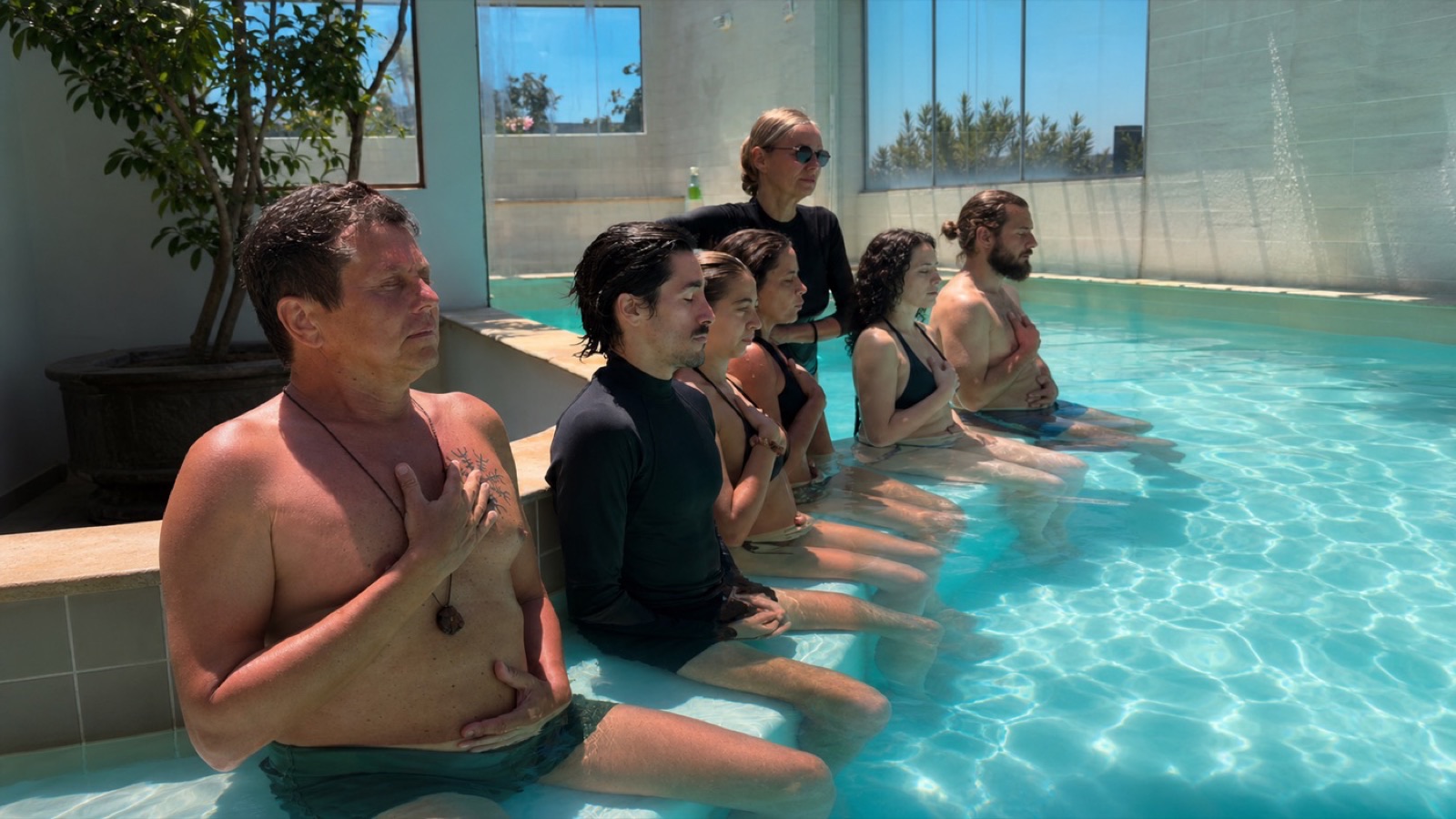
That is why the Prana Aquático cycle stretches the out-breath. The article on breathing and stress gives the full rhythm and a three-minute practice to feel this on dry land.
Training perception, not resistance
There is a name for the ability to sense what is happening inside the body: interoception. It is what tells you your shoulders have crept up, your jaw has locked, your breath has gone short, ideally before the tension makes the decision for you.
Apnea trains this in a very concrete way. During the pause, the urge to breathe arrives gradually, like a signal growing louder. The practice lies in recognising it early, without panic and without a fight, and choosing what to do. That gap between sensing and reacting is the very one that vanishes when the day gets tight.
What can be claimed, and what can't
Slow breathing, meditation and supervised apnea may support the self-regulation of the nervous system and a less automatic response to stress. The effects depend on regular practice and vary from person to person. Research on the subject is promising, but far from finished, and it is worth being wary of anyone who promises more than that.
The practice does not treat any condition, nor does it replace medical or psychological care. Some conditions call for an assessment before apnea, which is what the health screening is for. The safety rule applies here too: apnea in the water only under supervision, and no fast, deep breathing several times before a hold.